When a storm knocks out the water plant or a boil-water notice goes out, a good filter turns a creek, a rain barrel or a bathtub into drinking water. But not all filters do the same job. A straw is perfect for a go-bag and almost useless for cooking dinner for four. Here's how to match the filter to the situation.
Start with who you're filtering for
A personal filter serves one person drinking at the source. A household needs volume: water for drinking, cooking and basic hygiene, for several people, every day. That single question decides most of your choice.
For go-bags and cars, buy personal filters — one per person. For the home, add a gravity filter that can fill pots and jugs while you do something else.
Our picks
After comparing 6 water filters, we recommend the LifeStraw Personal Water Filter (5-Pack). If you want to spend less, the Sawyer MINI Water Filtration System (SP128) is a strong value.
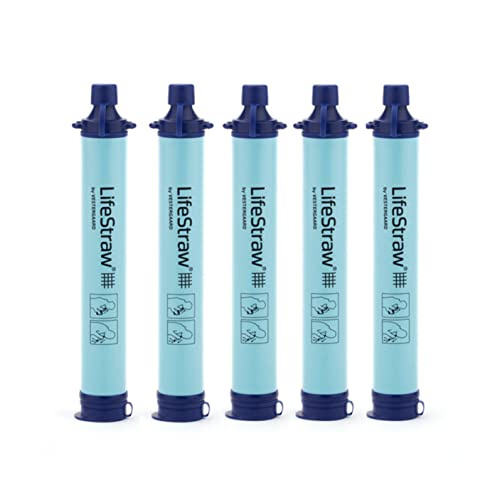
Our favorite overall
LifeStraw Personal Water Filter (5-Pack)
The best water filter to stock for the whole family — five no-maintenance straws that each make about 1,000 gallons safe to drink.
Save 6%
Great value for less
Sawyer MINI Water Filtration System (SP128)
The most versatile small filter — a 2-ounce, 0.1-micron filter rated for up to 100,000 gallons that works as a straw, a squeeze filter or an inline filter.
$28.99 from AmazonPrice as of Nov 28, 2026 18:30 UTC · DetailsRead our full review →The three main types
Straw filters (like the LifeStraw Personal) are the simplest: no setup, nothing to break. The catch is that you have to drink directly from the water source.
Squeeze filters (like the Sawyer MINI or Katadyn BeFree) let you squeeze water into a bottle or pot. That makes them far more useful around the house, and many double as straws.
Gravity filters (like the Membrane Solutions 6L) hang a bag of dirty water above a clean container. They are the best choice for a family because they filter hands-free while you do other things.
Know what a filter can't remove
Most portable filters use a hollow-fiber membrane around 0.1 to 0.2 microns. That removes bacteria and protozoa such as Giardia and Cryptosporidium, plus sediment and microplastics. It does not reliably remove viruses, and it does not remove chemicals, fuel or heavy metals.
In North America, bacteria and protozoa are the main concern in natural water. But floodwater can carry chemicals and sewage. If you suspect contamination, use water from a cleaner source, and treat for viruses by boiling or with a chemical treatment as directed on the label. A carbon stage, like the one in some gravity filters, improves taste and odor but is not a fix for chemical contamination.
Filter life and flow rate
Rated capacity varies enormously, from about 1,000 liters for some bottles to 100,000 gallons for the Sawyer MINI. For a home plan, long life matters more than ounces.
Flow rate is about convenience. A fast filter like the BeFree or LifeStraw Peak fills a liter in under a minute. Every membrane filter slows down as it clogs, so pick one you can backflush or clean, and pre-filter muddy water through a cloth first.
Don't let it freeze
Hollow-fiber filters can be damaged by freezing, and you usually can't tell by looking. In winter, keep your filter in an inside pocket or sleeping bag, and store home filters where they won't freeze.
A simple water plan
Filters are the backup; stored water is the first line. Keep a supply of stored water, a gravity filter for the house, and a personal filter in every go-bag and car. Know your nearby water sources ahead of time: a creek, a pond, a rain barrel, even the water heater tank.

See every pick we recommend, with live Amazon prices.
See all 6 Emergency Water Filters picks →Frequently Asked Questions
Do water filters remove viruses?
Most portable hollow-fiber filters do not reliably remove viruses. They remove bacteria and protozoa. If viruses are a concern, boil the water or use a chemical treatment as directed on the product label.
Can I filter floodwater?
It's best avoided. Floodwater can contain chemicals and fuel that ordinary filters don't remove. Use a cleaner source whenever possible.
How long does an emergency water filter last?
It depends on the model. Ratings range from about 1,000 liters to 100,000 gallons. Check the rated capacity, and replace any filter that has frozen or stops flowing even after cleaning.